

 Tadany Um refúgio para a alma e um convite à consciência.

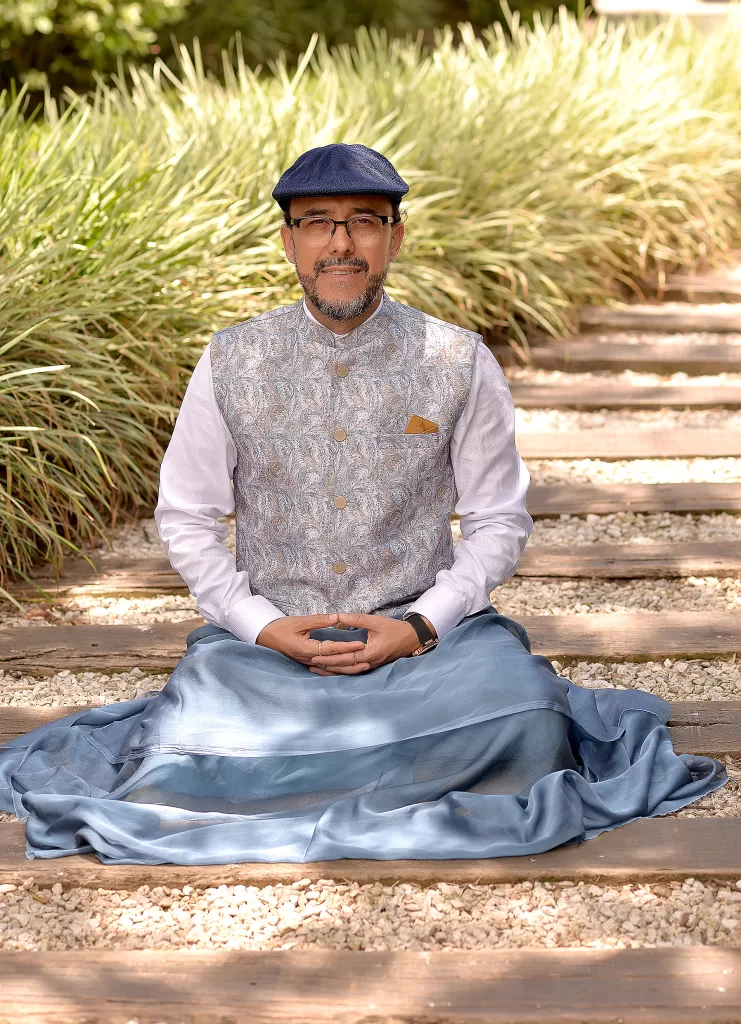
॥ विवेकचूडामणि ॥ … Vivekacūḍāmaṇi … By Acharya Tadany
Class 3, Oct 26, 2026.
Summary
Key Concepts
- Guru Namaskāra: The tradition of saluting the Guru at the beginning of a Vedāntic text, equating the Guru with Brahman/Īśvara
- Sadguru vs. “Sad Guru”: Clarification that “Sat” in Sadguru refers to pure existence (Brahman), not sadness; the Guru is the embodiment of Paramānanda (supreme bliss)
- Govinda Bhagavatpāda: Śaṅkarācārya’s actual Guru (not Gauḍapāda, who was the Guru’s Guru)
- Agocaram: That which is beyond all human instruments of knowledge — not available for sensory perception, inference, or scientific experimentation
- Apauruṣeya Pramāṇam: The impersonal, revealed means of knowledge (Śruti/Upaniṣads/Vedānta) as the only valid instrument for knowing Brahman
- Sarva Vedānta Siddhānta: The essential, core teaching of all Upaniṣads — the non-dual vision of reality (Advaita)
- Manuṣya Janma (Human Birth): The rarity and supreme value of being born human, as only humans possess free will and the capacity to pursue Mokṣa
- Puruṣārtha: The four human goals — Artha, Kāma, Dharma, and Mokṣa — accessible only through human birth
- Sthūla and Sūkṣma Śarīra: The gross physical body and the subtle body, which can be fully expressed only in a human form
- Viveka: Discernment — the foundational practice of distinguishing between the real and the unreal, the eternal and the transient
Important Questions Raised
- Why does Shankaracharya begin the text with a salutation to the Guru rather than to God?
- What is the difference between a Guru and a Sadguru in the Vedantic tradition?
- Why is Brahman described as “Agocaram” — beyond all human means of knowledge?
- What distinguishes Vedānta (metaphysics/spiritual science) from empirical material science, and why should the two never be conflated?
- What makes human birth uniquely rare and valuable among all species?
- Can science ever be used to understand or prove consciousness as described in Vedanta?
Essence
- Śaṅkarācārya opens Vivekacūḍāmaṇi with a Guru Namaskāra, equating the Guru with Brahman, establishing that Guru and God are non-different.
- Śaṅkarācārya’s Guru was Govinda Bhagavatpāda, not Gauḍapāda (who was the Guru’s Guru).
- Brahman, the subject matter of Vedānta, is “Agocaram” — beyond sensory perception, inference, and all human instruments of knowledge.
- Vedānta and material science are two entirely distinct bodies of knowledge with different means (Pramāṇas); they must never be conflated or used to validate each other.
- The core teaching (Tātparya) of all Upaniṣads is the non-dual vision of reality — not cosmology, not the physical body, not food or matter.
- Human birth is extraordinarily rare (one among 840,000 species) and uniquely valuable because only humans possess free will and the capacity for self-inquiry leading to Mokṣa.
- Only in a human body can the Sūkṣma Śarīra (subtle body) be fully expressed and the path to liberation pursued.
- Students should not dismiss secondary teachings (e.g., cosmology, the physical body) but understand them as stepping stones toward the ultimate knowledge of consciousness.
The Mangala śloka – Invocation and the Nature of the Guru
The first verse of Vivekacūḍāmaṇi is a Maṅgala Śloka, an auspicious invocation that traditionally opens any Vedāntic text. While most texts begin with a salutation to Īśvara (God), Śaṅkarācārya uniquely begins with a Guru Namaskāra — a salutation to his Guru.
This choice is deliberate and philosophically significant: Śaṅkarācārya sees no difference between his Guru and God, as expressed in the well-known verse “Guru Brahmā, Guru Viṣṇu, Guru Deva Maheśvara; Guru Sākṣāt Param Brahma.”
The Guru referenced here is specifically a Sadguru — one who teaches the knowledge of Sat (Brahman, pure existence), i.e., Brahmavidyā.
Śaṅkarācārya clarifies that this Guru is not merely a physical person but is of the nature of Paramātmā itself. He identifies his Guru as Govinda Bhagavatpāda, describing him as the embodiment of Paramānanda (supreme bliss). The adjective “Paramānanda” is explicitly used to dispel any misreading of “Sadguru”, emphasizing that the Guru is a source of the highest joy and liberation.
Agocaram — Brahman Beyond All Human Knowledge
A central teaching of the opening verse is the concept of “Agocaram” — that Brahman, the subject matter of Vedānta, is not available to any human instrument of knowledge. “Gocara” means an object of perception; “Agocara” means that which cannot be objectified. Brahman is not available for sensory perception, logical inference, or scientific experimentation because it is not matter — it is pure consciousness, the eternal subject, the witness (Sākṣī) behind all experience.
Acharya Tadany drew a clear distinction between two bodies of knowledge: material science (physics), which deals with gross and subtle matter and collects data through empirical instruments, and Vedānta (metaphysics), which deals with consciousness and is accessible only through Apauruṣeya Pramāṇam — the revealed, impersonal means of knowledge found in the Śruti (Vedas, Upaniṣads, Bhagavad Gītā).
Just as the eyes cannot perceive sound and the ears cannot perceive color, each instrument of knowledge operates within its own sphere. Science cannot probe consciousness, and Vedānta does not deal with matter. Conflating the two leads to confusion and intellectual error.
Śaṅkarācārya’s first line — “Sarva Vedānta Siddhānta Gocaram” — thus serves as an immediate orientation for the student: what you are about to study is beyond the reach of science, and its only valid means of knowledge is Vedānta itself.
Sarva Vedanta Siddhanta — The Core Teaching of All Upanishads
Śaṅkarācārya uses the phrase “Sarva Vedānta Siddhānta Gocaram” to identify the essential subject matter of the entire body of Vedāntic literature. “Sarva Vedānta” refers to all the Upaniṣads; “Siddhānta” means the Tātparya — the essential vision, the core intention. The Tātparya of all Upaniṣads is the non-dual vision of reality: the recognition that Brahman/Paramātmā is the one, non-dual, ultimate reality.
Acharya Tadany emphasized that while the Upaniṣads discuss many topics — cosmology, the physical body (Annamaya Kośa), food, perception — these are not the Tātparya. They are stepping stones, not the destination.
For example, the Taittirīya Upaniṣad’s teaching that the body is born from food, sustained by food, and returns to food is factually true but does not require the Upaniṣads to be known.
Similarly, in the Bhagavad Gītā, descriptions of conch-blowing before battle are contextual, not the core teaching. The essence is found in verses such as “Nasato vidyate bhāvo, nābhāvo vidyate sataḥ” — the real never ceases to exist, the unreal never comes into existence.
So, disciples are encouraged to recognize secondary teachings as useful scaffolding while keeping the ultimate goal — knowledge of Brahman/Ātman — clearly in view.
The Glory of Human Birth — Manusha Janma
Verses 2 through 5 of Vivekacūḍāmaṇi address the extraordinary rarity and value of human birth. The Śāstra references 840,000 species of living beings. Among all these, being born as a human being is described as “Durlabham” — exceedingly rare and difficult to attain. The odds of obtaining a human birth are therefore approximately one in 840,000 species, with millions of individual beings within each species.
More importantly, human birth is not merely rare — it is uniquely equipped for the pursuit of Mokṣa. Only human beings possess free will (Svātantrya), which enables them to pursue the four Puruṣārthas: Artha (wealth), Kāma (desire), Dharma (righteousness), and Mokṣa (liberation).
Animals operate on instinct and pre-programmed behavior; they cannot follow Dharma, experience guilt, or engage in self-inquiry. Human beings alone are self-conscious, which leads to self-judgment, self-doubt, and ultimately the existential question “Who am I?” — a confusion that only arises in, and can only be resolved in, a human birth.
Furthermore, it is only in a human body that the Sūkṣma Śarīra (subtle body, comprising the 19 instruments of mind, intellect, memory, ego, five sense organs, five organs of action, and five Prāṇas) can be fully expressed and utilized. An elephant, for instance, possesses a mind and intellect but cannot fully manifest them due to the limitations of its physical form.
Śaṅkarācārya urges students not to take human birth for granted and to use it purposefully by studying Vivekacūḍāmaṇi and pursuing the knowledge of Brahman.
Q&A after class
Question (Preksha): “My understanding of the universe is based largely in science — that the universe is a manifestation of energy governed by rules, and behind those rules is a common underlying intelligence outside our system that we cannot study. I feel the Western use of ‘consciousness’ is different from what Vedānta means. Is this framework correct, or is it not in line with Vedāntic teaching?”
Acharya Tadany answered by stating that the scientific framework is a good starting point and reflects a clear, structured mind. However, it is important not to superimpose a Dvaita (dualistic) framework onto Advaita (non-dual) Vedānta. In Vedānta, we do infer causes from effects (e.g., inferring the three Guṇas from observable reality), and we acknowledge both a material cause and an intelligent cause for the universe.
However, the ultimate step is to recognize that the source from which everything manifests is not separate from one’s own true nature.
The Upaniṣad’s bold claim — “that which once is known, everything else is known” — points to this non-dual understanding. The methodology of Śravaṇam (listening to the Śāstra) is essential to move beyond the dualistic framework toward Advaita.
Question (Preksha S): Preksha shared an experience of crying during a dream — tears physically flowing while asleep — and reflected that the physical body responded to an entirely internal, mental reality with no external basis. This led to the insight that if the inner world can impact the outer body without any external stimulus, then the external world does not necessarily have to impact one’s inner state in the same way.
Acharya Tadany said that this is a very insightful observation. It directly relates to the distinction between the Sthūla Śarīra (gross physical body) and the Sūkṣma Śarīra (subtle body), which operate at different levels of experience. The physical body manifests in one realm; the subtle body manifests in another.
This discernment — Viveka — is precisely the first step that will be studied in Vivekacūḍāmaṇi: distinguishing between the gross and the subtle, the real and the unreal, the eternal (Nitya) and the transient (Anitya).
Sanskrit Terms and Meanings
Below is a comprehensive glossary of Sanskrit terms used in this class, presented with standard transliteration and their meanings:
| Sanskrit Term | Meaning / Definition |
| Advaita | Non-duality; the philosophical position that ultimate reality (Brahman) is one without a second |
| Agocaram | That which cannot be objectified; beyond the reach of all human instruments of knowledge |
| Anitya | Impermanent, transient, subject to change |
| Annamaya Kośa | The physical body sheath, born from and sustained by food |
| Apauruṣeya Pramāṇam | Impersonal, revealed means of knowledge; the authority of the Vedas/Upaniṣads |
| Artha | Wealth, material prosperity; one of the four Puruṣārthas |
| Ātman | The true Self; pure consciousness; identical with Brahman |
| Bhagavad Gītā | The Song of the Lord; a foundational scripture of Vedānta, part of the Mahābhārata |
| Brahman | The ultimate, absolute reality; pure consciousness; the substratum of all existence |
| Brahmavidyā | The knowledge of Brahman; the supreme spiritual knowledge |
| Dharma | Righteousness, duty, moral order; one of the four Puruṣārthas |
| Durlabham | Exceedingly rare, difficult to attain |
| Dvaita | Duality; the philosophical position that God and the individual soul are distinct |
| Gauḍapāda | The Guru of Govinda Bhagavatpāda; author of the Māṇḍūkya Kārikā |
| Gocara | Object of perception; that which can be known through the senses or mind |
| Govinda Bhagavatpāda | The Guru of Śaṅkarācārya; a revered teacher in the Advaita tradition |
| Guṇas | The three qualities of material nature: Sattva (purity), Rajas (activity), Tamas (inertia) |
| Guru | Spiritual teacher; one who removes darkness (ignorance) and reveals light (knowledge) |
| Īśvara | The Lord; God as the creator and sustainer of the universe |
| Kāma | Desire, pleasure; one of the four Puruṣārthas |
| Kośa | Sheath or covering; the five layers (physical, vital, mental, intellectual, bliss) that veil the true Self |
| Maṅgala Śloka | Auspicious invocation; a verse of blessing at the beginning of a text |
| Manuṣya Janma | Human birth; the rare opportunity to pursue spiritual knowledge and liberation |
| Mokṣa | Liberation, freedom from the cycle of birth and death; the ultimate Puruṣārtha |
| Namaskāra | Salutation, prostration, respectful greeting |
| Nitya | Eternal, permanent, unchanging |
| Paramānanda | Supreme bliss, the highest joy |
| Paramātmā | The Supreme Self; Brahman as the innermost essence of all beings |
| Pramāṇa / Pramāṇam | Means of valid knowledge; instrument of knowing (e.g., perception, inference, testimony) |
| Pratyakṣa | Direct perception; knowledge gained through the senses |
| Prāṇa | Vital life force; the five subtle energies that sustain bodily functions |
| Puruṣārtha | The four goals of human life: Dharma, Artha, Kāma, Mokṣa |
| Sadguru | True Guru; one who teaches the knowledge of Sat (Brahman, pure existence) |
| Sākṣī | Witness; the unchanging consciousness that observes all mental and physical activities |
| Śāstra | Veda, Scripture; authoritative texts of spiritual and philosophical knowledge |
| Śaṅkarācārya | The great Advaita philosopher and saint (8th century CE); author of numerous Vedāntic commentaries |
| Siddhānta | Established conclusion; the essential teaching or core doctrine. Tātparya. |
| Śloka | Verse; a metrical unit of Sanskrit poetry |
| Śravaṇam | Listening; the first step in Vedāntic study – attentive hearing of the teachings from a Guru |
| Śruti | That which is heard; the revealed scriptures (Vedas and Upaniṣads) |
| Sthūla Śarīra | Gross physical body; the material body made of the five great elements |
| Sūkṣma Śarīra | Subtle body; comprising 19 instruments (mind, intellect, memory, ego, 5 sense organs, 5 organs of action, 5 Prāṇas) |
| Svātantrya | Free will; the capacity for independent choice and self-directed action |
| Taittirīya Upaniṣad | One of the principal Upaniṣads; deals with the five sheaths (Kośas) and the nature of Brahman |
| Tātparya | Essential meaning, core intention; the ultimate purpose or vision of a text |
| Upaniṣad | End portion of the Vedas; philosophical texts revealing the knowledge of Brahman |
| Vedānta | The end (culmination) of the Vedas; the philosophical teachings of the Upaniṣads; Advaita Vedānta is the non-dual interpretation |
| Viveka | Discernment, discrimination; the ability to distinguish the real from the unreal, the eternal from the transient |
| Vivekacūḍāmaṇi | “The Crest-Jewel of Discrimination”; a classical Advaita Vedānta text by Śaṅkarācārya |
Acharya Tadany