Tadany Um refúgio para a alma e um convite à consciência.

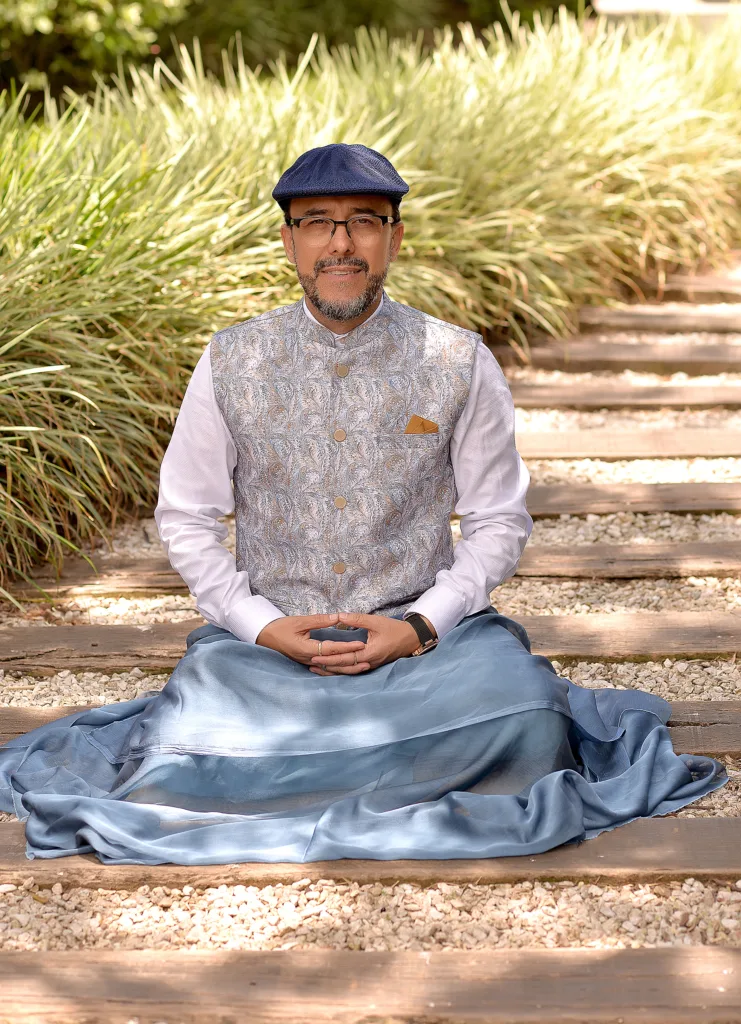
Tattva Bodha – Summary, by Acharya Tadany
Class 51
Date: July 6, 2025
In this class, Acharya Tadany continued the profound topic of Jīva-Īśvara Aikyam, reviewing the three components of the individual and the cosmic being, and emphasizing the shift from duality to non-duality.
Sanskrit Pronunciation: The Five Places of Sound Production
Before the main teaching, Acharya Tadany provided guidance on correct Sanskrit pronunciation, explaining the five places of sound production in the mouth and the distinction between soft and hard consonants (indicated by “h” in transliteration).
The Three Bodies: Temporary Reflecting Mediums
Acharya Tadany reminded students that Krishna compares the physical body to clothing that we wear and eventually discard. This principle extends to all three bodies:
- Sthūla Śarīra (physical body) — Temporary, subject to birth and death.
- Sūkṣma Śarīra (subtle body) — Lasts longer but is still impermanent.
- Kāraṇa Śarīra (causal body) — The seed form, also temporary and discarded at liberation.
All three bodies function as reflecting mediums (upādhi) that produce reflected consciousness. Since they are temporary, they cannot be our true nature.
Original Consciousness: The True Nature of Ātmā
Our real nature is not the reflecting medium or the reflected consciousness, but the Original Consciousness (Ātmā/Brahman) — eternal, immutable, and all-pervading. This is established in the definition of Ātmā at the beginning of Tattva Bodha.
The Wave and Ocean Analogy
Using the analogy of a wave and the ocean, Acharya Tadany explained:
- When the wave identifies as “I am a wave,” it experiences fear of destruction upon reaching the shore.
- When it realizes its true nature is water, it becomes immortal — the form comes and goes, but the essence remains.
This applies both to the individual (jīva) and the cosmic (Īśvara). The journey is from Dāsoham (“I am a servant of God” — duality) to Soham (“I am That” — non-duality).
Saṃsāra and Mental Preparation for Loss
As long as we identify with the temporary reflecting medium, we remain in saṃsāra — the cycle of birth and death accompanied by insecurity. True wisdom means being mentally prepared to lose what is losable, welcoming things when they arrive and letting them go when they depart.
Questions after Class
- Preparing for the loss of loved ones: Grief is natural and should be fully expressed. Vedānta provides perspective and faster recovery, but does not deny human emotions.
- Suicide and end-of-life decisions: Suicide is an abuse of free will with severe karmic consequences. However, in cases of terminal illness or irreversible conditions, context and dharma must be carefully considered. Vedānta does not offer a single answer for all situations — everything depends on the specific context.
Key Takeaways
- The three bodies are temporary reflecting mediums; our true nature is Original Consciousness.
- The spiritual journey moves from duality (dāsoham) to non-duality (soham).
- Understanding Jīva-Īśvara Aikyam is the core of Vedānta.
- Mental preparation for loss and acceptance of impermanence are essential for living with wisdom.