

 Tadany Um refúgio para a alma e um convite à consciência.

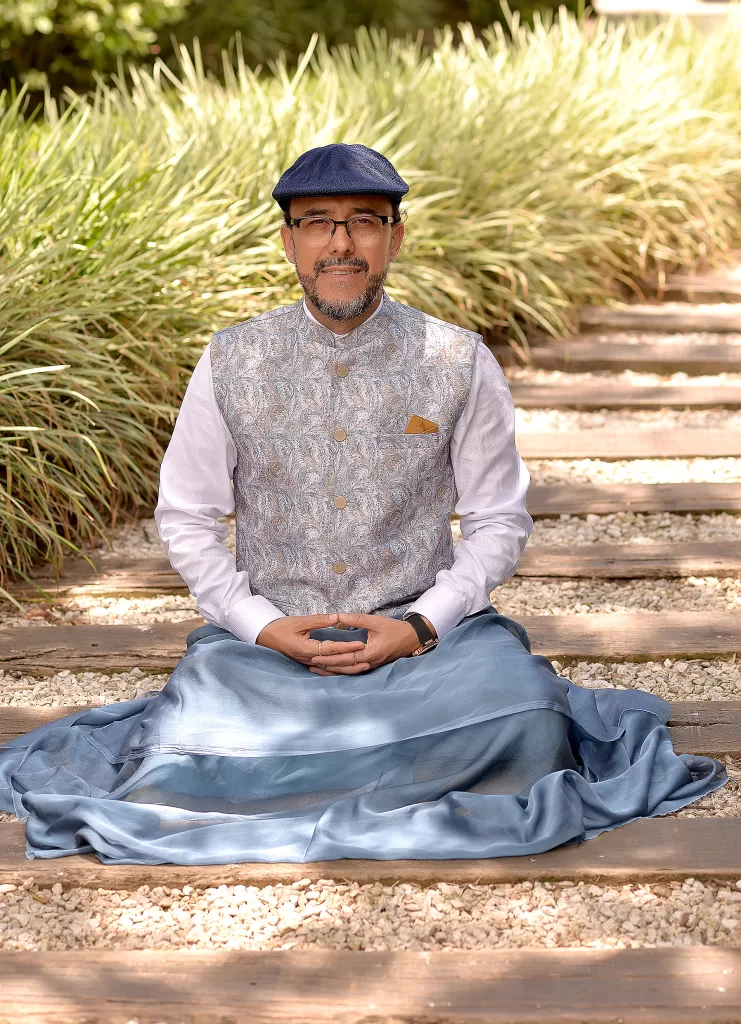
॥ विवेकचूडामणि ॥ … Vivekacūḍāmaṇi … by Acharya Tadany
Class 140, Oct 14, 2026.
Summary
Acharya Tadany conducted a short class focused on Śaṅkarācārya’s teachings from verses 124 to 136 of Vivekacūḍāmaṇi, exploring the profound nature of Ātmā (the Self) and the path to liberation (mokṣa).
This section of the text represents a pivotal conclusion to the detailed analysis of the Self that Śaṅkarācārya presents throughout the prakaraṇa. The class aimed to help students understand not just the intellectual framework of Self-knowledge, but the practical means by which one can realize one’s true nature and achieve freedom from suffering.
The Conclusion of Ātmā Discussion (Ślokas 124-136)
The class covered the concluding portion of the Ātmā discussion in Vivekacūḍāmaṇi. Acharya Tadany explained that these verses describe how knowing the Ātmā is the way to liberation. This knowledge is not theoretical but experiential—it requires direct recognition of one’s true nature.
In verses 124 to 136, Śaṅkarācārya systematically establishes the characteristics of the Ātmā and distinguishes it from all that is anātmā (non-Self). These ślokas serve as a bridge between the intellectual understanding of Vedāntic principles and their practical application in self-inquiry. The verses emphasize that liberation is not a future attainment or a distant goal, but the immediate result of knowing what one truly is, here and now.
Understanding Ātmajñānam (Self-Knowledge)
Acharya Tadany emphasized that Ātmajñānam is not about attaining something new or external. Rather, it is the recognition of what one already is. Liberation comes through understanding one’s true nature, not through acquiring something that was previously absent. This is a crucial distinction in Vedānta: the Self is never produced, never modified, never attained from elsewhere. It is eternal, ever-present, and self-luminous. What is needed is not creation or transformation but removal of ignorance (avidyā) that obscures this ever-present reality.
Just as one does not need to create the sun to see it, but only remove the clouds that hide it, similarly one does not need to create the Ātmā, but only remove the ignorance that conceals its nature.
This understanding shifts the spiritual quest from seeking something external to recognizing what has always been present.
Ātmā as First Person Singular
A crucial teaching point was that Ātmā should be understood as the first person singular—as “I” itself—not as an object of knowledge or a possession. Ātmā is not something one has; it is what one is. This distinction is essential for proper understanding. When we say “my body,” “my mind,” or “my thoughts,” we are speaking from the position of the Ātmā, the subject that possesses these things.
The Ātmā cannot be objectified because it is the very subject that knows all objects. It is the witness (sākṣī) of all experiences, never itself an object of experience.
This first-person nature of the Self means that Self-knowledge is fundamentally different from all other forms of knowledge. While we can know objects in the third person (“that is a tree”) or second person (“you are my friend”), the Self can only be known as “I am.” This immediate, non-dual self-awareness is the foundation of liberation.
Distinguishing Ātmā from Body-Mind-Sense Complex
Acharya Tadany clarified that the Ātmā is fundamentally different from the body, mind, and senses. These components are not the true Self but are like clothes that one wears or possesses. The eternal Ātmā remains distinct from this changing body-mind-sense complex.
The body (śarīra) is material, subject to birth, growth, decay, and death. The mind (manas) is the instrument of thought, constantly changing with each thought, emotion, and perception. The senses (indriyās) are the gateways through which the mind interacts with the external world. All of these are objects of awareness, tools that the Self uses but is not identical with. Just as one can observe one’s body becoming tired, one’s mind becoming agitated, or one’s senses becoming dull, the observer of these changes—the Ātmā—must be distinct from them.
The Ātmā is the unchanging witness of all these changing phenomena, the constant presence behind all temporary states. Understanding this distinction is essential for disidentifying from the limitations and suffering of the body-mind complex.
Direct Experience vs. Indirect Knowledge
The class stressed that knowing one’s true Self (Ātmā) through direct experience (aparokṣa jñāna) rather than mere indirect knowledge (parokṣa jñāna) is essential for spiritual freedom. Liberation requires immediate, non-dual recognition of one’s true nature.
Indirect knowledge comes through inference, testimony, or conceptual understanding—knowing about something without direct experience of it. For example, one can know about fire through descriptions or seeing smoke, but this is different from directly experiencing fire’s heat and light. Similarly, one can study scriptures and understand intellectually that “I am Brahman,” but this intellectual knowledge alone does not liberate.
Direct knowledge (aparokṣa jñāna) is immediate, non-conceptual awareness—it is the direct realization of one’s identity with the infinite, eternal consciousness. This direct knowledge arises through sustained contemplation (nididhyāsana) on the teachings heard from the guru (śravaṇa) and reflected upon deeply (manana). Only this direct, experiential knowledge has the power to destroy ignorance and its effects completely, bringing about liberation (mokṣa).
Conclusion
The class concluded with greetings for Navarātri, and Acharya Tadany indicated that the discussion on Ātmā would continue in the next class. The timing of this class during the auspicious period of Navarātri—the nine nights celebrating the Divine Mother—added a special significance to the teaching. Navarātri represents the triumph of knowledge over ignorance, consciousness over unconsciousness, which aligns perfectly with the subject matter of Ātmajñānam.
Acharya Tadany’s indication that the exploration of Ātmā would continue suggests that this foundational teaching requires deeper elaboration and repeated contemplation for students to fully assimilate its profound implications.
Acharya Tadany