Tadany Um refúgio para a alma e um convite à consciência.

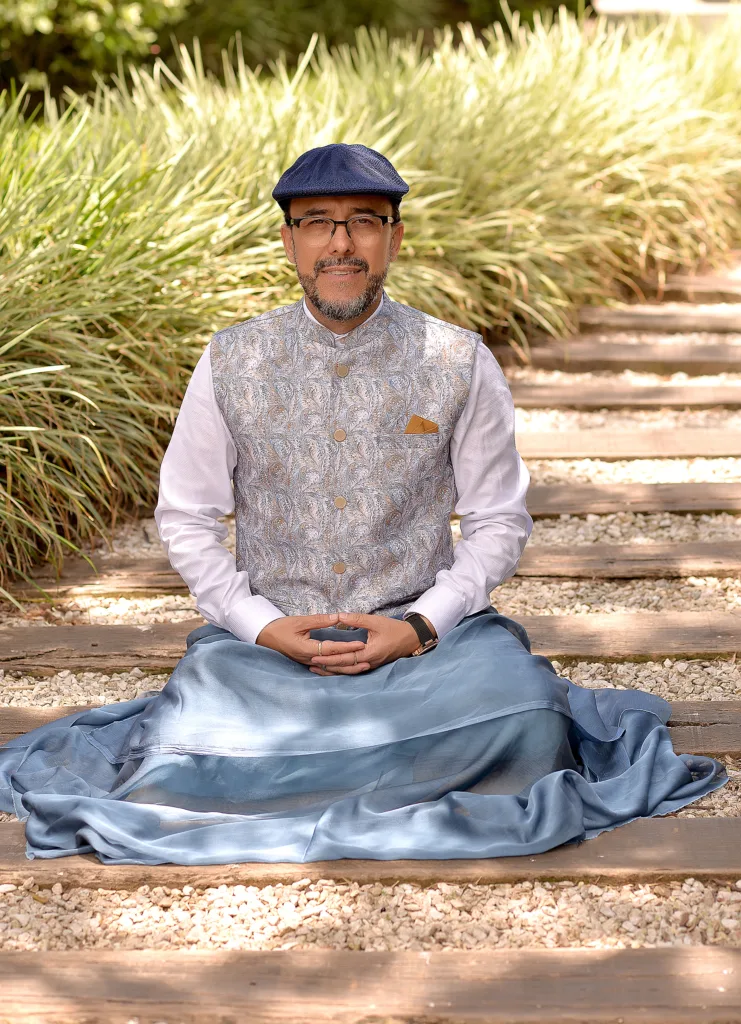
Tattva Bodha – Summary, by Acharya Tadany
Class 45
Date: May 25, 2025
In this class, Acharya Tadany continued the analysis of the individual (vyaṣṭi vicāraḥ), explaining the formation of the physical body through the five gross elements and introducing key concepts about the three bodies, the fourteen planes of existence, and the nature of Consciousness.
Pañca Sthūla Bhūtāni – The Five Gross Elements
The physical body (sthūla śarīram) is formed from the five gross elements produced through pañcīkaraṇam:
- Pṛthvī (Earth) – Solid structures of the body, obtained through food from the plant kingdom.
- Jala (Water) – Regulates hydration, shape, and fluidity of the body with remarkable self-regulation.
- Agni (Fire) – Maintains constant body temperature and acts as a defense mechanism (fever).
- Vāyu (Air) – Governs breathing and the movement of prāṇa.
- Ākāśa (Space) – Provides internal and external space within and around the body.
These elements correspond to Ayurvedic principles (Vāta = Air, Pitta = Fire, Kapha = Water).
The Three Bodies and Their Lifespans
- Sthūla Śarīram (Physical Body): Shortest lifespan (up to ~122–200 years), dissolves at death.
- Sūkṣma Śarīram (Subtle Body): Longer lifespan, survives physical death until the end of the universe (pralaya).
- Kāraṇa Śarīram (Causal Body): Longest lifespan, exists until liberation (mokṣa), sustained by ignorance (ajñāna).
The Fourteen Planes of Existence (Caturdaśa Bhuvanāni)
Acharya Tadany described the seven upper worlds (Bhūr, Bhuvar, Suvar, Mahar, Jana, Tapo, Satya) and seven lower worlds (Atala to Pātāla). All planes are made of the five gross elements, but differ in subtlety and quality of experience.
Microcosm and Macrocosm (Piṇḍāṇḍa and Brahmāṇḍa)
The individual (microcosm) and the universe (macrocosm) share the same three-fold structure (gross, subtle, causal) and are pervaded by the same Consciousness.
Five Essential Principles of Consciousness
- Consciousness is not a product or property of the body.
- It is an independent principle that enlivens the inert body (like electricity in a bulb).
- It is unlimited and all-pervading (Satyam Jñānam Anantam Brahma).
- It continues to exist after the death of the body.
- The same Consciousness pervades all beings — from rocks to humans.
Introduction to Jīva and Īśvara
The class concluded by introducing the fourth major topic of Tattva Bodha: the relationship between the individual soul (jīva) and the cosmic Lord (Īśvara).
Key Takeaways
- The physical body is a temporary composition of the five gross elements.
- Consciousness is eternal, independent, and all-pervading — it is not limited by any body.
- The difference between beings (rock, plant, human) lies in the proportion of the three guṇas, not in Consciousness itself.
- True understanding comes from recognizing the distinction between the sentient Consciousness and the insentient matter it pervades.