Tadany Um refúgio para a alma e um convite à consciência.

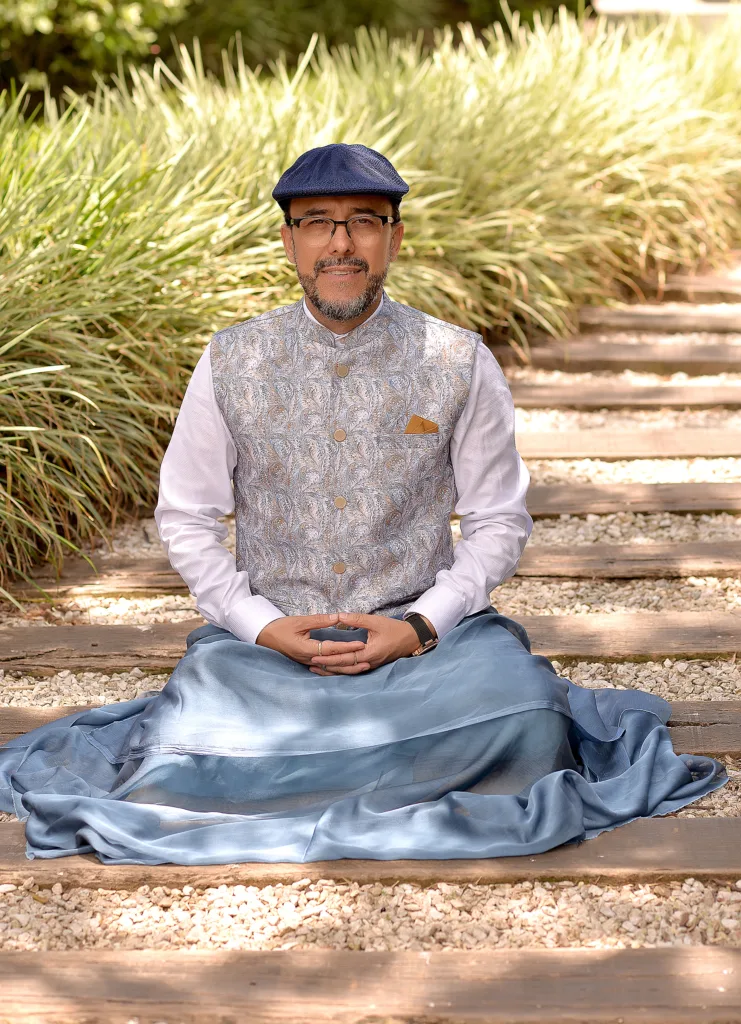
Vivekacūḍāmaṇi – Summary, by Acharya Tadany
Class 121
Date: May 27, 2026
In this class, Acharya Tadany continued the teaching on māyā and the three guṇas, with a special focus on Śaṅkarācārya’s unique division of sattva guṇa into three stages and the characteristics of one who is established in pure sattva.
Māyā and the Causal Body
Acharya Tadany explained that in the Vivekacūḍāmaṇi, Śaṅkarācārya identifies kāraṇa śarīram (causal body) with māyā, also called avyaktam (unmanifest), śaktiḥ (power), and triguṇātmikā (endowed with three qualities).
The three guṇas of māyā are:
- Rajo guṇa (vikṣepa śakti) — Projecting power that creates the illusion of individuality and separateness.
- Tamo guṇa (āvaraṇa śakti) — Veiling power that hides our true nature as Ātmā.
- Sattva guṇa — The quality of purity, which Śaṅkarācārya further divides into three levels.
The Three Stages of Sattva Guṇa
- Malina Sattva (Impure Sattva)
The person remains a bound saṃsārī with no qualification for liberation (non-adhikārī). Despite having some goodness, they are dominated by rajas and tamas — like a good leader surrounded by corrupt ministers. - Miśra Sattva (Mixed Sattva)
The person becomes a qualified seeker (adhikārī). They are still in saṃsāra, but now have genuine hope of liberation through Vedānta study and practice. - Śuddha / Viśuddha Sattva (Pure Sattva)
The person attains jīvanmukti — liberated while living. This is the state of the jñānī who has fully assimilated Self-knowledge.
Characteristics of Śuddha Sattva (from verse 119 onwards)
Acharya Tadany detailed the qualities of one established in pure sattva:
- Prasādaḥ — Deep tranquility of mind. In miśra sattva it is relative (āpekṣika) and fragile; in śuddha sattva it is absolute (ātyantika) and effortless.
- Svātmānubhūti — Immediate, direct knowledge of the Self (aparokṣa jñānam).
- Parama Praśāntiḥ — Absolute, unshakeable peace.
- Tṛpti — Self-contentment that ends all comparison and jealousy.
- Praharṣaḥ — Profound inner fulfillment and fullness (pūrṇatvam).
The Lottery Ticket Analogy
To illustrate the journey, Acharya Tadany used a beautiful analogy:
Just as one needs some money to buy a lottery ticket that can make one rich, one needs a certain degree of relative peace (āpekṣika śāntiḥ) to study Vedānta. Through sincere study and practice, one is guaranteed to attain absolute peace (ātyantika śāntiḥ).
Important Teaching on Comparison
Even among sincere spiritual seekers, comparison and jealousy can arise (e.g., who has studied more texts). Acharya Tadany noted that this is natural in the miśra sattva stage, but completely dissolves once Self-knowledge is assimilated.
Key Takeaways
- Māyā, through its veiling and projecting powers, sustains the cycle of saṃsāra.
- Spiritual growth is a progression from malina → miśra → śuddha sattva.
- True liberation is marked by absolute peace, contentment, and fullness that no longer depends on external conditions.
- Self-knowledge is the decisive factor that transforms a qualified seeker into a liberated being.